

Every Quran journey starts with the right foundation. Noorani Qaida online gives your child, or you, that foundation from your own living room. A qualified tutor teaches live, one-on-one, and corrects every letter as it is spoken.
For many families in the USA and UK, motivation isn’t the hard part. The hard part is finding a patient teacher, fitting lessons around school and work, and knowing where a complete beginner should start. This guide covers how Noorani Qaida online works, what each stage teaches, how long it takes, which mistakes to avoid, and how to choose a teacher. It is written for parents in New York, Houston, Chicago, and London, and for adults in smaller towns where the nearest class is a long drive away.
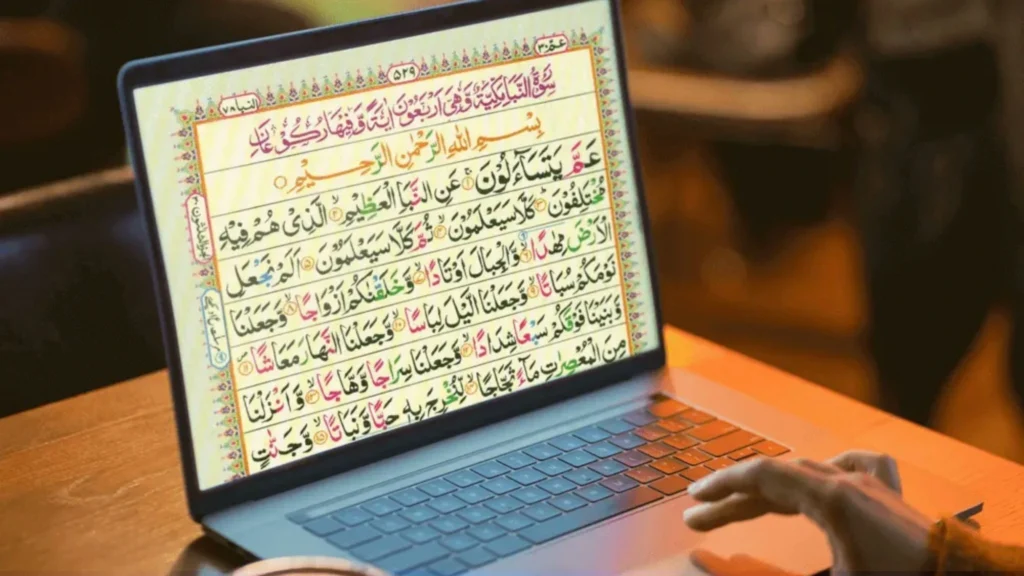
What Is Noorani Qaida, and Why Learn It Online?
Noorani Qaida is a step-by-step primer that teaches the Arabic letters, their sounds, and the basic reading rules. It prepares a beginner to read the Quran correctly. Learning Noorani Qaida online means taking those lessons by live video with a tutor, usually one-on-one, so mistakes in pronunciation are caught immediately.
The word “Qaida” means a rule or foundation. The primer builds on itself, so each lesson prepares you for the next.
Key Takeaways
Click each point below to review the essential takeaways from this guide
Noorani Qaida online suits children from about age 5 and adults of any age, including new Muslims and those who never learned to read the Quran.
The order matters: letters, joined letters, short vowels, tanween, long vowels, then sukoon and shaddah.
Pronunciation is the real skill. A live tutor who hears you is worth more than any app or video.
Lesson counts and sequence vary slightly between editions, so ask your teacher which one they use.
The most common mistake is rushing to the Quran before the letters are secure.
Compare academies on teacher qualifications, one-on-one time, progress reports, and a free trial, not on price alone.
Why Noorani Qaida Online Works for US and UK Families
Muslim families across the USA and UK often face the same practical barriers. Weekday evenings are full of homework and activities. Weekend classes at the masjid may be crowded. In cities like Dearborn, Houston, Birmingham, and Bradford, good teachers are available, but classes fill quickly. In smaller towns, there may be no class at all.
Noorani Qaida online removes most of these barriers:
- No commute. A 30-minute lesson takes 30 minutes, not 90.
- Individual attention. A tutor can slow down on a letter your child finds hard, which a group class cannot always do.
- Flexible timing. Lessons can fit around school, work, and prayer times.
- Choice of tutor. Many families prefer a female tutor for daughters, and online academies make that easy.
Parents can listen in, which helps you support practice at home.
Most of the benefit comes from one thing: the tutor hears every sound and corrects it right away. That is the heart of learning Noorani Qaida online well.

What You Will Learn, Stage by Stage
Learning Qaida lessons in order is what makes the primer work. Editions differ in how they divide the lessons, but the progression below is the standard one.
Stage What is learned Example
- Single letters The shapes and sounds of the Arabic letters (28, or 29 if hamzah is counted separately) and where each sound comes from in the mouth (makharij) Telling apart similar sounds like ص and س
- Joined letters How letters change shape at the start, middle, and end of a word بـ in different positions
- Short vowels Fatḥah (zabar), kasrah (zair), and ḍammah (pesh) بَ (ba), بِ (bi), بُ (bu)
- Tanween Double vowels that add an “n” sound at the end بً، بٍ، بٌ
- Long vowels Stretching a vowel sound (madd) The long “aa” in a word like “kitaab”
- Sukoon and shaddah A silent consonant, and a doubled consonant بْ and بّ
- Reading rules Noon sakinah, stopping (waqf), and moving into basic Tajweed Short connected words and phrases
A note on terms for readers who learned the Urdu names: zabar is fatḥah, zair is kasrah, and pesh is ḍammah. Good teachers use both so parents can follow along. After these stages, most students move to Quran reading with Tajweed. Our courses page shows the path from Qaida to Nazra, Tajweed, and Hifz.

Noorani Qaida for Kids Age, Attention, and Lesson Length
Noorani Qaida for kids works best when lessons are short, regular, and gentle. Many teachers start children around age 5 or 6, but readiness matters more than the number. A child who can sit with a tutor for about 20 minutes and repeat sounds is ready to begin.
What helps most:
- Short sessions. Twenty to 30 minutes, several times a week, usually beats one long weekly lesson.
- Daily five-minute revision. Reading yesterday’s page aloud locks in the sounds.
- Praise for effort. Children who feel safe making mistakes learn faster.
- A quiet spot with a clear view of the screen and a printed or digital copy of the book.
- A parent nearby, especially for younger children, to help them settle and stay focused.
The Prophet ﷺ said, “The best among you are those who learn the Quran and teach it” (Sahih al-Bukhari). Starting young is a gift, but this also reminds parents that learning alongside your child is encouraged, not just supervising it.
Noorani Qaida Online for Adults
Many adults in the US and UK never learned to read Arabic properly. Some grew up without a local teacher. Others are new Muslims. If that is you, you are not behind, and you are not alone. Adults often progress quickly because they can focus longer and ask direct questions.
The main hurdle for adults is confidence. Embarrassment keeps many people from starting. A private one-on-one setting at home removes that pressure. No one watches, no one compares, and your tutor’s only job is to help you read correctly. If you want to understand the Arabic letters first and the rules second, Noorani Qaida online is a gentle and respectful way to begin.
Start with a Free Trial
Try a lesson, meet the tutor, and see how your child responds before committing. Apply for a free trial or call or WhatsApp us at +1 (207) 280-8288.
A Sample First Month (Hypothetical)
This is an illustrative example, not a client result.
Imagine a seven-year-old in Chicago who has never read Arabic. She has three 25-minute lessons per week with a female tutor.
- Week 1: She learns the first group of letters and where each sound comes from. She practises five minutes a day with a parent listening.
- Week 2: She finishes the single letters and begins joining them.
- Week 3: She starts fatḥah, kasrah, and ḍammah, and reads short combinations like بَ بِ بُ.
- Week 4: The tutor revises everything so far and fixes the sounds she still mixes up.
Progress will differ for every child. The point is that steady, short lessons with daily revision build a strong base, and nothing is rushed.
Common Mistakes to Avoid While Learning
- Rushing to the Quran. Skipping Qaida lessons means weak pronunciation later, and bad habits are harder to fix than to prevent. Take time at each stage.
- Memorising the page instead of the letters. Some children recite the lines from memory without recognising the letters. Ask your tutor to test reading out of order.
- Ignoring makharij. Mixing up similar sounds, like ص and س, changes the reading. Slow, repeated correction fixes this.
- Long lessons with no revision. One long weekly lesson is less effective than short regular ones with daily practice.
- Choosing only on price. A cheap class with large groups or untrained tutors costs more in the end if you have to relearn.
- Not asking about the tutor’s qualifications. Ask where they studied Tajweed and whether they have an ijazah. A good academy answers openly.

How to Choose a Noorani Qaida Teacher
Before enrolling in any Noorani Qaida online programme, check:
- Qualifications. Tajweed training, experience with beginners, and experience with children.
- One-on-one time. Group classes can work, but beginners usually progress faster individually.
- Choice of male or female tutor.
- A free trial, so you can judge the teaching first.
- Progress reports, so you know what has been covered.
- Clear packages, with no hidden costs or pressure to sign up.
- Support in your time zone, which matters for UK families with US-based teachers and the other way round.
- Patience. Watch how the tutor handles mistakes. That tells you most of what you need to know.
You can compare our options on the packages page.

Start the Right Way
Noorani Qaida online is not just a first step. It is the groundwork for every recitation your child or you will do for years. Getting it right means learning with a patient, qualified tutor who hears you, corrects you, and moves at your pace. Whether you are in New York, Houston, London, or anywhere between, you can begin from home.
Take the free trial, meet a tutor, and see how Noorani Qaida online fits your family. Apply at islamicscenario.com/free-trial, or call or WhatsApp +1 (207) 280-8288. In sha Allah, you will be reading with confidence sooner than you think.